Paired feeds
Both babies fed inside the same twenty-minute window, deliberately, from the first night. This is the single change that gives parents back a sleep block instead of two broken halves.
Twins and multiples
Paired feeding and sleep scheduling for twins and triplets, and unhurried handling for babies who came home from the NICU small.
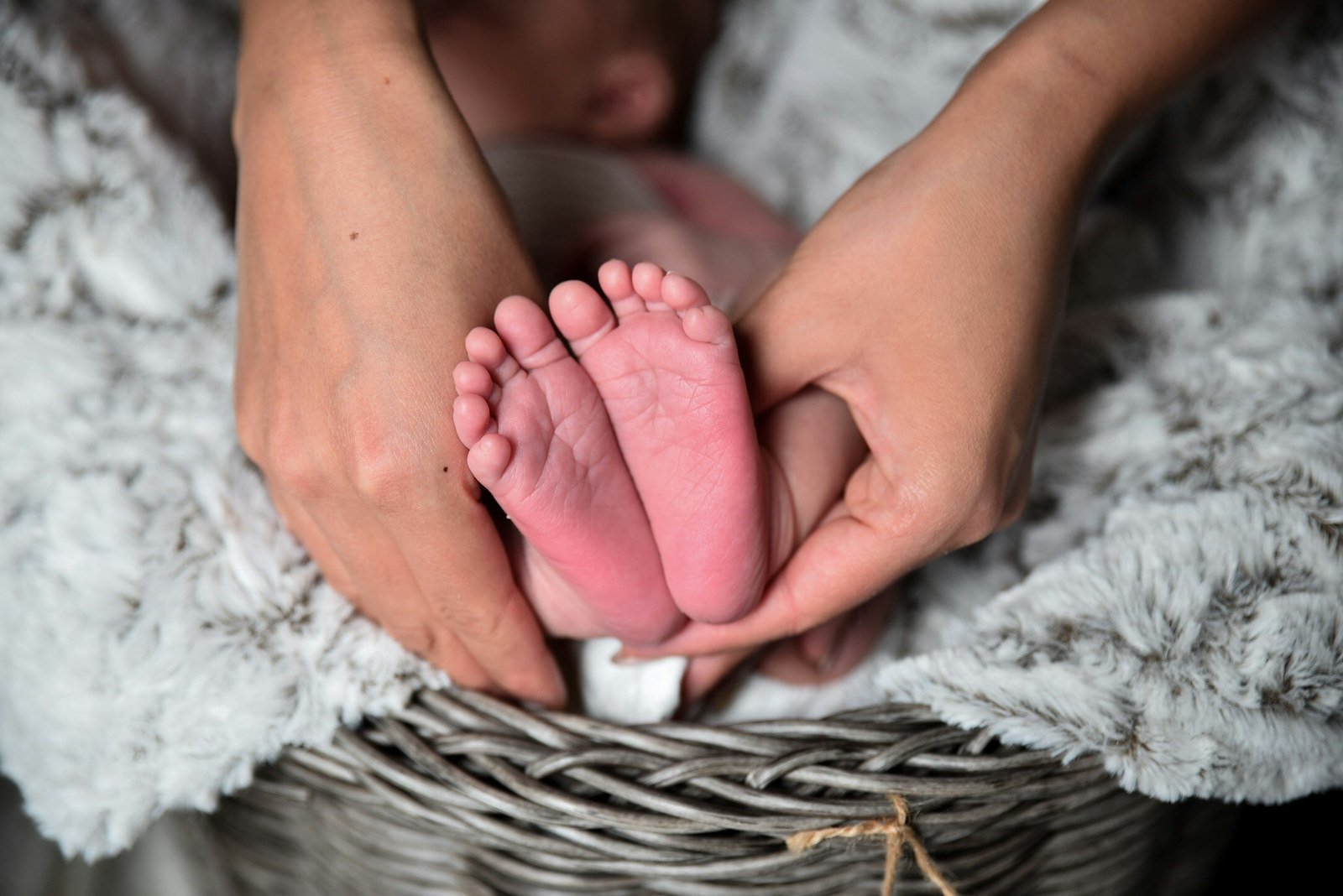
With one baby, an unsynchronised night costs a family sleep. With two, it costs them the whole night: if the babies wake forty minutes apart, nobody in the house gets an unbroken hour.
Add an early arrival — and most multiples arrive early — and you have two babies on a NICU feeding schedule, two sets of weight checks, and parents who have been told to wake babies who will not stay awake.
Both babies fed inside the same twenty-minute window, deliberately, from the first night. This is the single change that gives parents back a sleep block instead of two broken halves.
Intake, output and sleep tracked separately, so a weight check is a thirty-second conversation rather than an interrogation of your memory.
We keep the hospital’s schedule on day one and move off it gradually, in the direction your pediatrician has agreed, rather than starting over at your front door.
Slower feeds, more frequent pauses, attention to cues, and a lower-stimulation room. Small babies tire before they are full.
For twins overnight, one specialist is usually right. For triplets, or for 24-hour cover, it is two — and I will tell you that even though it is the more expensive answer.
I work alongside your pediatrician, and an IBCLC where supply or latch is in question. I flag; I do not assess.
A call with you while you are still on the unit, so the first night home is planned and not improvised.
The hospital schedule, kept exactly. Nothing new is introduced on the first night home.
Feeds begin to pair. Wakings are still led by the babies, not the clock.
The pairing holds through the night. Bedtime moves earlier by fifteen minutes a week.
Everything is measured from the adjusted due date, not the birth date, and I will keep saying so.
Every family’s version of this differs. It is a shape, not a script, and we write yours down together before the first shift.
A related case
Case 04
The routine held across an eight-hour time change.
Two nights of disruption, then back to the pre-move pattern.
Questions
Your contract holds a window, not a date — typically two weeks either side of your due date. If the baby comes early I start early, and if that overlaps a family finishing their block I arrange cover with a specialist I have worked with and introduce you first. If the baby is late, the block simply shifts. Your deposit moves with you and is not forfeited for a change in the baby’s timing.
The second trimester is the honest answer. Most of my due-date windows are held four to six months ahead, and twins go faster than singletons. That said, I keep one window open each month for late enquiries and NICU discharges, so ask even if you are past thirty-six weeks.
For a standard ten to twelve hour night shift: somewhere to sit near the baby and access to a bathroom. That is genuinely all.
For 24-hour or live-in work, a real rest period is not a courtesy, it is a safety requirement — a tired caregiver is a worse caregiver. I need a private room with a door and a bed, access to a bathroom, and an agreed uninterrupted five-hour block in every twenty-four. For seven-day coverage I will arrange a second specialist rather than pretend one person can do it well.
I do not diagnose, I do not prescribe, I do not give medical advice and I do not treat anything. I am not a nurse, a physician or an IBCLC. I can support a feeding plan, I cannot assess a tongue tie or a supply problem — that is an IBCLC’s work and I will tell you when you need one. I will not sleep-train a baby who is not developmentally ready, and I will not use a method a parent has asked me not to use. When something is outside my scope I say so the same night, in writing, and help you find the right person.
The consultation is free: 15–20 minutes, by phone or video.